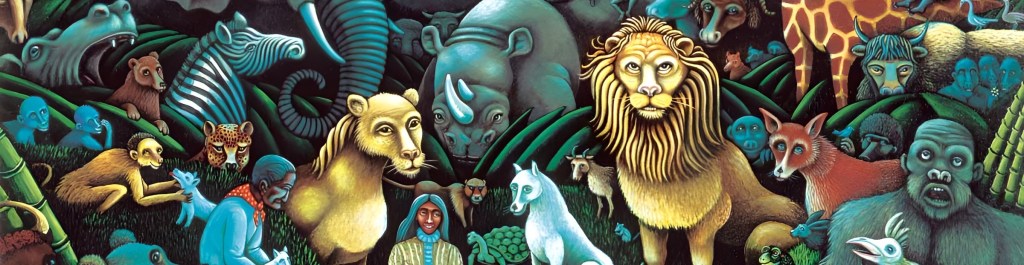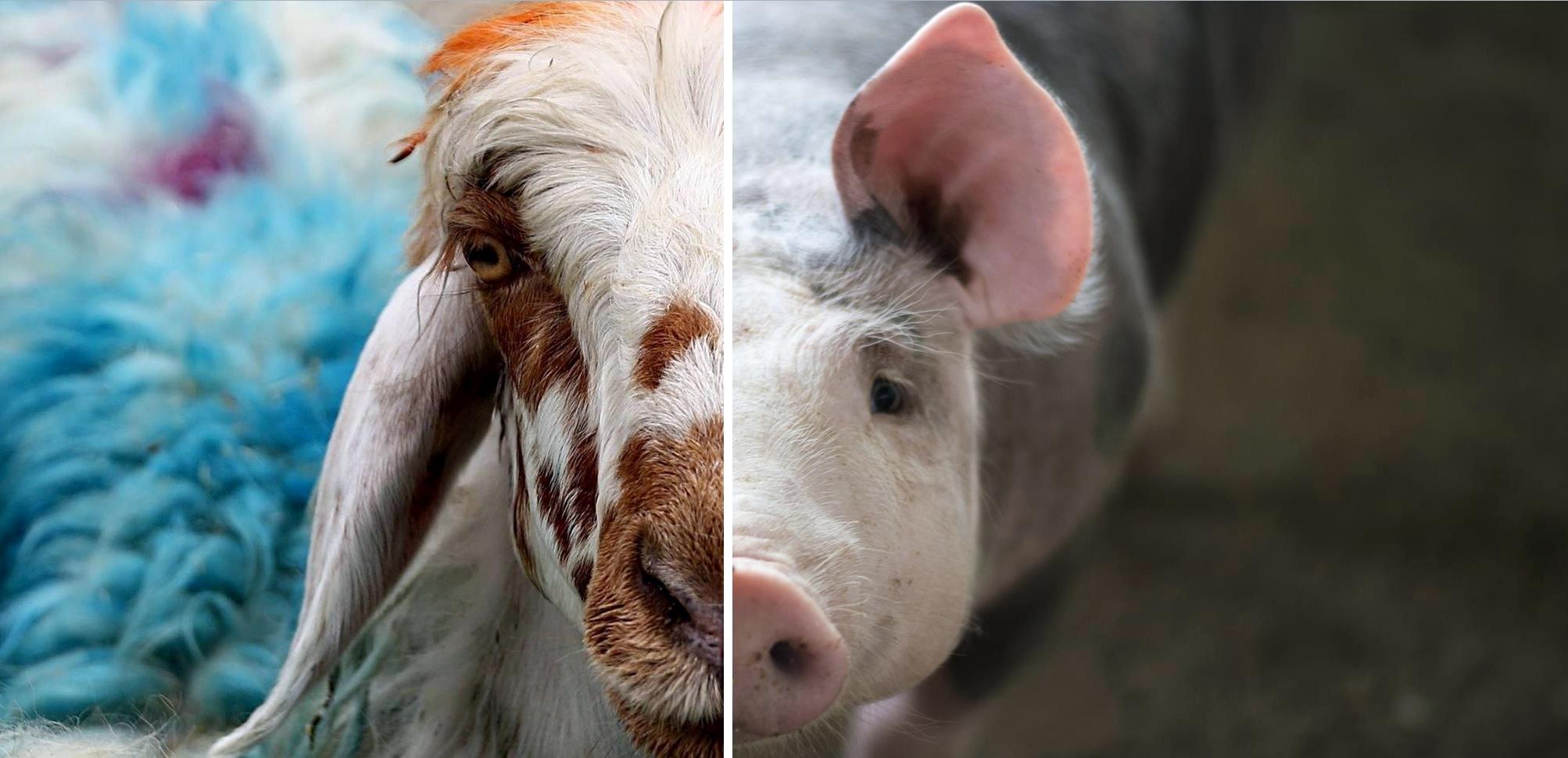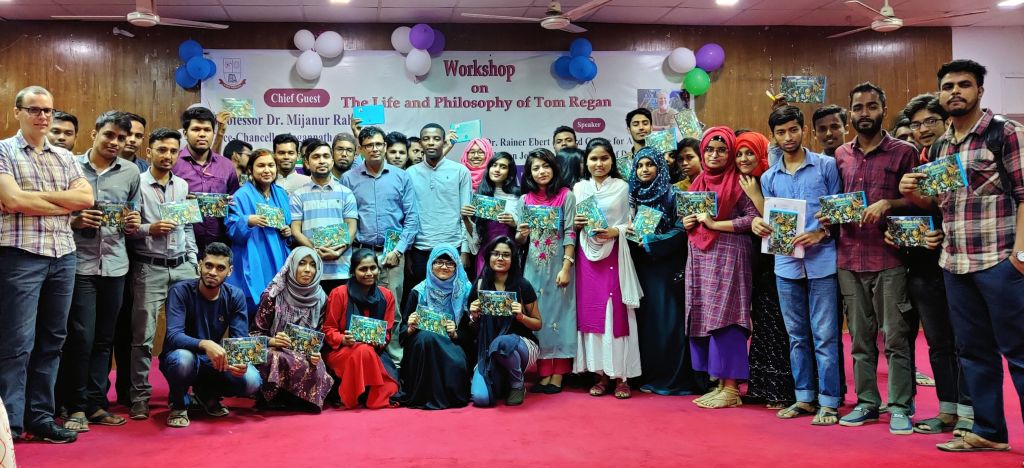
The other animals humans eat, use in science, hunt, trap, and exploit in a variety of ways, have a life of their own that is of importance to them apart from their utility to us. They are not only in the world, they are aware of it. What happens to them matters to them. Each has a life that fares better or worse for the one whose life it is.
In December 2024, Motlatsi Khosi, Kala Bopape, and I organized an international animal ethics conference, Humans and Other Animals: Rattling the Paradigm, with the aim of creating a space where students and early career practitioners, particularly from the Global South, could meet and explore the complex relationship between humans and other animals.
After the conclusion of the conference, the presenters were invited to work their presentations into publishable papers. The result is a special issue of the Bangladesh Journal of Bioethics, which has just been published and is available here. It contains the following articles, all of which are open access:
অন্য যেসব প্রাণীকে মানুষ খায়, বিজ্ঞানে ব্যবহার করে, শিকার করে, ফাঁদ পেতে ধরে এবং বিচিত্র উপায়ে শোষণ করে, আমাদের কাছে তাদের উপযোগিতা ছাড়াও তাদের একটি স্বকীয় জীবন রয়েছে যা তাদের কাছে গুরুত্বপূর্ণ। তারা যে শুধু পৃথিবীর মাঝে অস্তিত্বশীল তা-ই নয়, তারা এ ব্যাপারে অবগতও বটে। তাদের জীবনে যা ঘটে তা তাদের কাছে গুরুত্বপূর্ণ। প্রত্যেকের একটি জীবন আছে যা জীবনধারীর কাছে উৎকৃষ্টতর বা নিকৃষ্টতররূপে প্রতিভাত হতে পারে।
78 abstracts from numerous countries were submitted in response to our call for abstracts, out of which nine were selected for presentation. On each conference day, there will be three sessions of 45 minutes.
The conference language is English. Attendance is free, and anybody anywhere is welcome to join! If you would like to attend, please register using this form no later than Friday, December 13, 2024.
You can find the complete program on our conference website. For a PDF copy, please click here. A poster is available here.
When people are treated monstrously, we say they are “treated like animals.” This is because we treat animals monstrously. We mistreat and abuse them on farms, transport them in cramped and stressful conditions, torture them in laboratories, hunt them for sport, and use them for our entertainment in circuses and zoos. You know that, I know that, everyone knows that. And yet, the horror continues, and it continues on a scale that is truly mind-boggling.
In May 2020, when people were panic-buying toilet paper and supply chains were crumbling due to COVID-19, Iowa’s largest pork producer found itself with thousands of pigs that no longer had commercial value. Led by the logic of profit maximization, Iowa Select Farms decided that keeping the pigs alive was not worth the cost. The pigs had to die, and their deaths had to be fast and cheap.
Animal Liberation, a 1975 book by Australian philosopher Peter Singer, is widely considered one of the founding texts of the modern animal liberation movement. It develops a new ethics for our treatment of nonhuman animals, according to which their interests should be given the same consideration as the like interests of humans, and calls for an end to practices such as factory farming and animal testing. The book has had a lasting impact on generations of scholars and students and has influenced countless people in all corners of the world to adopt a vegan diet.
Almost half a century after its first publication, Animal Liberation is now finally available in Swahili! The book was translated by Deogratius Simba and published by Dar es Salaam-based publisher Mkuki na Nyota. It is available for purchase at the TPH Bookshop at 24 Samora Avenue in Dar es Salaam, and everywhere else where Mkuki na Nyota’s books are sold. The retail price is 30,000 TSh. If you are a student at the University of Dar es Salaam (UDSM), you can find a copy of the book at the library of UDSM’s Department of Philosophy and Religious Studies.
If the ultimate test of our humanity is how we treat nonhuman animals, then we are failing spectacularly. Earth is home to vastly more farm animals than wild mammals and birds, and almost all of them live in factory farms – where conditions vary from horrible to horrific – and die violently. The sheer numbers make our treatment of animals one of the most pressing moral issues of our time. You do not need to be an animal rights advocate to recognize this truth. If you believe that animals have any moral standing at all, that unlike stones they matter, at least a little bit, then the monstrous amount of gratuitous suffering we routinely inflict on animals should offend your moral sense. A Gallup poll found that a majority of Americans in fact are either somewhat or very concerned about the way in which the animals we raise for food are treated, and extend that concern to the animals used in entertainment and research as well.
The Montreal Declaration on Animal Exploitation is a public condemnation of animal exploitation. As of now, more than 500 researchers in moral and political philosophy from across the globe and various philosophical traditions have signed the Declaration. I am one of them. In philosophy, such agreement is rare. Its part of a growing consensus that common human practices that involve treating non-human animals as mere commodities are fundamentally unjust and morally indefensible.
I just got back from a trip to what the British newspaper The Telegraph once called “the world’s most vegetarian country.” The country is Bangladesh, where – according to the UN Food and Agriculture Organization (FAO) – the average person consumes only about four kilograms of meat annually. For comparison, in the United States, the per-capita meat consumption is 120 kilograms.
Peter Singer‘s Animal Liberation, a modern classic in the field of ethics, is now available in Bangla! It is one of the most important books that you will ever read. It might change your life. It did change mine.
প্রাণিমুক্তি
প্রাণিমুক্তি আন্দোলনের বিজ্ঞানসম্মত প্রামাণিক ধ্রুপদী গ্রন্থ
The way we live, and the norms, beliefs, and attitudes that shape our behavior are constantly changing. Much of that change is driven by people who refuse to accept the status quo and rise to ask critical questions about what is right and wrong in how governments, communities, and individuals treat others, including members of sexual, racial, religious, and other minorities, dissidents, people with disabilities, women, nonhuman animals, and the natural environment.
The Centre de Recherche en Éthique (CRÉ) in Montréal, Canada, will unite students from across the globe to come together to explore the ethical considerations around social and political activism, and strategies to achieve local and global change. The conference aims to allow students to exchange ideas across borders and make sustainable connections with each other as well as with the CRÉ.
The conference will be conducted online via Zoom on Tuesday and Wednesday, 7 and 8 December 2021.
As Joe the politician prepares to be inaugurated as the next President of the United States, another Joe has also been making international headlines. Joe the pigeon was found in a backyard in the Australian city of Melbourne last December. He was carrying a leg band that seemed to suggest that he had been in the US state of Oregon two months earlier, raising questions about how he made it across the Pacific – no small feat!
The story made it onto local news and Australian authorities took notice. They declared Joe a “biosecurity risk” and decided that he must be killed in order to protect local birds from possible infection. A spokesperson for the Australian government did not actually use the word “killed,” but instead said that Joe must be “destroyed,” as if Joe was a car, a stone, or some other inanimate object.
Traditional morality assumes that there is something morally special about being human. The fact that someone is a human being, rather than, say, a dog or a cow, makes a big difference in how he or she may be treated. Humans have full and equal moral worth or dignity and thus may not be killed, even if doing so would promote the greater good, whereas non-human animals have a lesser moral status and can be sacrificed for even the most trivial human pleasures.
This moral worldview fits well with the Aristotelian idea of a hierarchy of being, according to which each species is a static group of organisms with a distinct essence. The philosophical line that morally distinguishes humans from other animals corresponds to the empirical line that Aristotle thought distinguishes the human species from other animal species. Since the publication of Charles Darwin’s The Origin of Species in 1859, however, we know that there is no such line on the empirical side of things. We now understand that all life is interrelated, and that biological characteristics come in degrees and continually evolve as a result of natural selection. As the principle of evolutionary continuity informs us, any differences between species are differences in degree, and not in kind. The real picture looks something like this:
Horrified by the tragic loss of innocent human life in the then-ongoing Vietnam War, a young philosopher by the name of Tom Regan went to the university library and buried himself in books on war, violence, and human rights, determined to prove that the American involvement in the war was morally wrong. One day, he picked up Mohandas K. Gandhi’s autobiography, The Story of My Experiments with Truth. Reading it with great care and interest, he must have come across the following lines:
The way we think about and treat non-human animals is deeply confused, and scholars are in a unique position to provide some clarity. The Bangladesh Journal of Bioethics hence decided to dedicate two special issues to the relationship between human beings and other animals, and asked me to be the guest editor.
Less than two weeks after the first issue was published, the second special issues has now been published as well, and is available here. My editorial, which includes brief summaries of the articles, is available here, and this is the table of contents:
Editorial
Bob Fischer (Texas State University, U.S.A.): Wild Fish and Expected Utility
Akande Michael Aina (Lagos State University, Nigeria) & Ofuasia Emmanuel (Olabisi Onabanjo University, Nigeria): The Chicken Fallacy and the Ethics of Cruelty to Non-Human Animals
Iván Ortega Rodríguez (Universidad Pontificia Comillas, Spain): Animal Citizenship, Phenomenology, and Ontology: Some reflections on Donaldson’s & Kymlicka’s Zoopolis
Rhyddhi Chakraborty (American University of Sovereign Nations, U.S.A.): Animal Ethics and India: Understanding the Connection through the Capabilities Approach
Robin Attfield (Cardiff University, U.K.) & Rebekah Humphreys (Trinity St. David’s University, U.K.): Justice and Non-Human Animals – Part 2