This article was published in the Bhorer Kagoj on July 25, 2013.

This article was published in the Bhorer Kagoj on July 25, 2013.
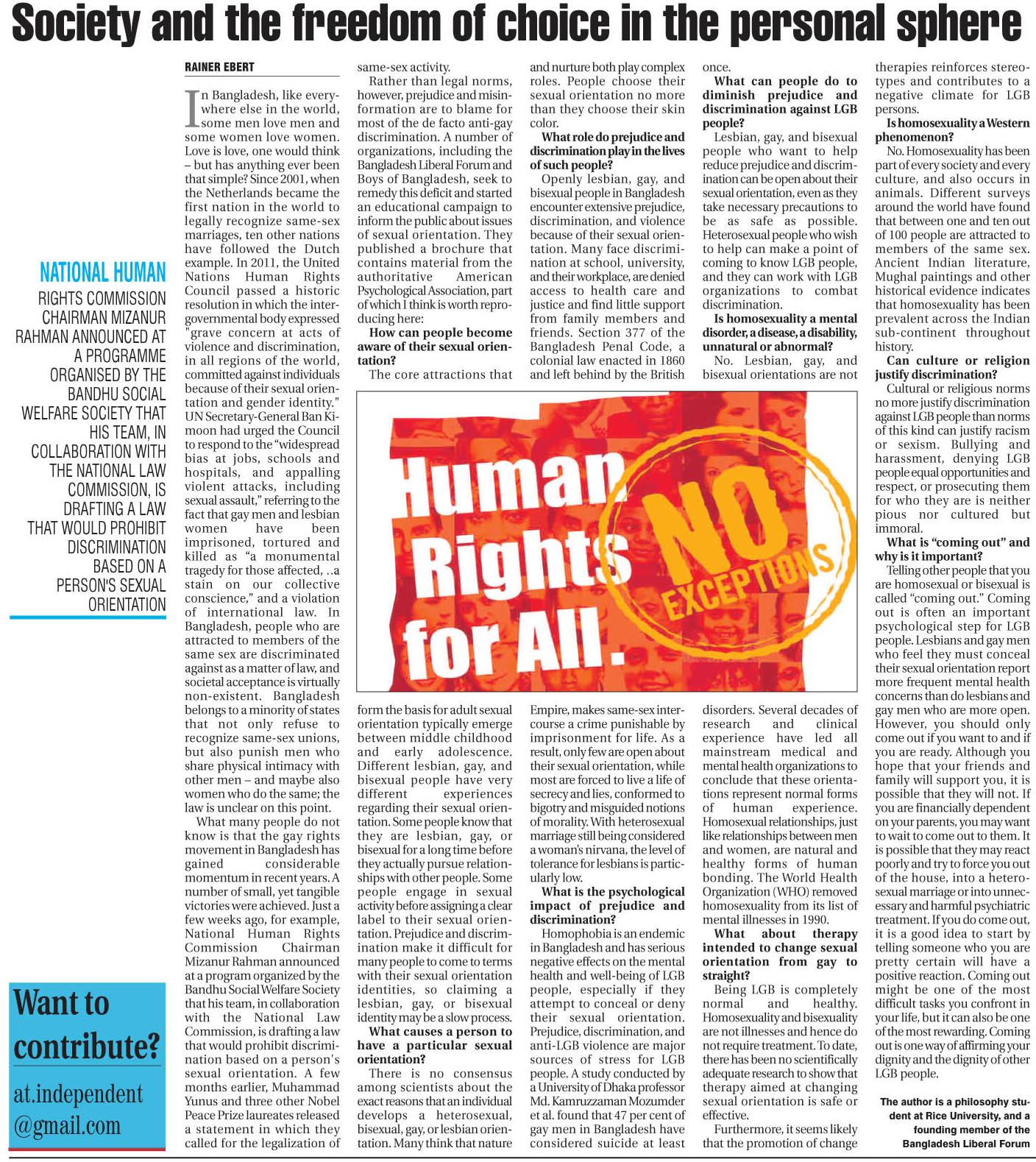
বিশ্বের অন্যান্য দেশের মতো বাংলাদেশেও কিছু মানুষ নিজ লিঙ্গের মানুষকে যৌনসঙ্গী হিসেবে বেছে নেন। আপনি ভাবতে পারেন ভালোবাসা তো ভালোবাসাই- কিন্তু বিষয়টা কি এত সহজ? Continue reading “সমকামিতা : ধারণা বনাম বাস্তবতা”
আমরা ছিলাম। আমরা আছি। আমরা থাকবো।
যৌন প্রবৃত্তি কি?
যৌন প্রবৃত্তি বলতে বোঝায় পুরুষ, নারী, উভয় লিঙ্গের প্রতি পার¯পারিক আবেগ, প্রণয় এবং /অথবা যৌন আকর্ষণজনিত এক স্থায়ী সম্পর্কাবস্থা। এই যৌন প্রবৃত্তির একটি প্রান্তে কেউ কেউ শুধু মাত্র বিপরীত লিঙ্গের প্রতি আকর্ষণ বোধ করে, আর অপর প্রান্তে কেউ কেউ শুধু মাত্র সমলিঙ্গের প্রতি আকর্ষণ বোধ করে। তবে সাধারণত যৌন প্রবৃত্তিকে তিনটি ভাগে ভাগ করা যায়ঃ বিপরীতকামিতা (বিপরীত লিঙ্গের প্রতি আকর্ষণ), সমকামিতা (সমলিঙ্গের প্রতি আকর্ষণ) এবং উভকামিতা (উভয় লিঙ্গের প্রতি আকর্ষণ)। Continue reading “সমকামিতা সম্পর্কে আপনার কি জানা উচিত”
মানুষের সবচেয়ে গুরুত্বপূর্ণ অধিকার খুব সম্ভব মতপ্রকাশের স্বাধীনতা, এ মুহূর্তে বাংলাদেশে এ নাগরিক অধিকারটি হুমকির সম্মুখীন। হেফাজতে ইসলাম কঠোর ব্লাসফেমি আইন প্রণয়নের দাবি জানাচ্ছে এবং সরকার মুক্তমতের পক্ষে না থেকে একটি হীন আপোষের নীতি গ্রহণ করেছে, ফলে মিডিয়া সাধারণের তথ্যঅধিকার প্রদানে বাধাপ্রাপ্ত হচ্ছে, গ্রেপ্তার হয়েছেন বা হওয়ার আশঙ্কায় রয়েছেন এমন তরুণ ব্লগারদের ভবিষ্যত অনিশ্চিত হয়ে পড়ছে; ধ্বংসের আশঙ্কার মুখে পড়েছে দেশের গণতন্ত্রের ভবিষ্যতটাও। Continue reading “ব্লাসফেমি আইন বনাম মতপ্রকাশের স্বাধীনতা”
“Ever since I was in first grade, I was teased by my classmates for my girlish behavior. Back then, I didn’t even know I was gay; and being called gay was quite offending. I used to get teased, bullied and even took a few hits for my ‘inappropriate’ behavior. Continue reading “Bangladesh’s LGBT Community and the UPR 2013”
The right to express one’s opinion freely is maybe the most important democratic right, and it is currently under assault in Bangladesh. Hifazat-e-Islam demands the introduction of strict blasphemy laws, and the government, instead of defending freedom, resorts to an ill-advised and imprudent appeasement strategy that hinders the press in its duty to inform the public, threatens the futures of young bloggers who were, and continue to be, arrested, and puts in peril the future of the democracy of the country. Continue reading “Blasphemy and the right to offend”
Background: The Guardian
If Mr. Mollah committed the crimes he was convicted for, and if anyone deserves to die, he does. It is hence not surprising that the death penalty is on everybody’s lips in Bangladesh these days. However, we do not wish to comment on the case of Mr. Mollah, as we would hardly be in a position to do so. We leave this case to others more familiar with it and more competent than us. Instead, we will offer some thoughts on capital punishment in general, drawing from the debate about killing criminals in our respective home countries – South Africa and Germany.
Amra Chhilam. Amra Achhi. Amra Thakbo.
What is sexual orientation?
Sexual orientation refers to an enduring pattern of emotional, romantic, and/or sexual attractions to men, women, or both sexes. Sexual orientation ranges along a continuum, from exclusive attraction to the other sex to exclusive attraction to the same sex. However, sexual orientation is usually discussed in terms of three categories: heterosexual (having attractions to members of the other sex), gay/lesbian (men attracted to men/women attracted to women), and bisexual (men or women attracted to both sexes). Continue reading “What You Should Know About Homosexuality”
Am 13. Dezember berichtete die Ipf- und Jagst-Zeitung über einen besonders grausamen Fall von Tierquälerei, der sich vor einigen Wochen in Adelmannsfelden ereignete. Einem jungen Kater wurden fünf Gummibänder so um den Kopf gespannt, dass er keine Nahrung mehr zu sich nehmen konnte. Außerdem wurde ihm ein fingerbreiter Dübel in den Anus eingeführt. Glücklicherweise wurde der Kater gefunden und konnte gerettet werden. Bestürzt über die Tat setzte ein Tierfreund einen Tag nachdem über den Fall berichtet wurde eine Belohnung von 200 Euro für Hinweise aus, die zur Ergreifung der unbekannten Täter (des Täters, der Täterin) führen. Continue reading “Moralisch schizophren”
এটা ছিল শাহানার প্রথম বিদেশভ্রমণ। শাহানা একটি ইংরেজি মাধ্যম স্কুলের দশম শ্রেণির ছাত্রী। তার নিজের স্কুল আর নিউইয়র্কে তাদের একটি পার্টনার স্কুলের যৌথ উদ্যোগে পরিচালিত একটি স্টুডেন্ট-এক্সচেঞ্জ প্রোগ্রামের সূত্রে শাহানার এ ভ্রমণ। প্রতি গ্রীষ্মে তাদের স্কুল থেকে নির্বাচিত হয়ে একজন ছাত্র বা ছাত্রী মার্কিন যুক্তরাষ্ট্রে যায়। সেখানে তাদের পার্টনার স্কুলের একজন শিক্ষার্থীর পরিবারের সঙ্গে সপ্তাহচারেক তার থাকার ব্যবস্থা করা হয়। এর বিপরীতে সে-বছরের শীত-মৌসুমেই ওই স্টুডেন্ট-এক্সচেঞ্জ প্রোগ্রামের অংশ হিসেবে একজন আমেরিকান ছাত্র বা ছাত্রীও বাংলাদেশ ভ্রমণের সুযোগ পায়। Continue reading “ওরা তো আমাদের শিশুদেরই মতো”
“ইন্নোসেন্স অভ মুসলিমস” মুভির ১৪ মিনিটের ট্রেইলারটি, যে মুভির অস্তিত্ব হয়ত আছে, হয়তবা নাই, ডাহা নির্বোধ এবং দুর্বলভাবে নির্মিত। মুসলিম হোক বা না হোক, বুদ্ধিমত্তাসম্পন্ন যে কারো কাছে এটা দেখা বেদনাদায়ক হবে। ইজিপ্সিয়ান বংশদ্ভুত আমেরিকায় অভিবাসী নাকৌলা ব্যাসেলেই নাকৌলা প্রযোজিত ট্রেইলারটা প্রথমে ইউটিউবে আপলোড করা হয় ২০১২ সালের জুলাই মাসে। সে সময় থেকে সেপটেম্বর প্রথম সপ্তাহ পর্যন্ত এটি কারোরই মনোযোগ আকর্ষণ করেনি। তারপর, সেপ্টেম্বারের ৮ তারিখ, মিশরের টেলিভিশন উপস্থাপক খালেদ আব্দুল্লাহ ফিল্মটার উপর রিপোর্ট করেন এবং ট্রেইলারটার আরবী সংস্করনের কিছু অংশ দেখান। তারপর কী হলো তা আমাদের সবার জানা। Continue reading “ইউটিউব নিষেধাজ্ঞা এবং অগ্রগতির সঠিক পথ”
The 14-minute trailer of the movie titled “Innocence of Muslims,” a movie that may or may not exist, is poorly made and outright stupid. Anyone of even modest intelligence, Muslim or not, will find it painful to watch. The trailer, produced by Egyptian-born U.S. resident Nakoula Basseley Nakoula, was initially uploaded to YouTube in July 2012. From that time until September it got the attention it deserves: none. Then, on September 8, Egyptian television host Khaled Abdallah reported on the film and showed excerpts of an Arabic version of the trailer. We all know what happened next. Continue reading “The YouTube ban and the right road to development”
প্রিয় মুসলিম ভাই ও বোনেরা, মুসলিম জাতির জন্য আশির্বাদ ও বছরের আধ্যাত্মিক একটি উৎসব হিসেবে কুরবানী ঈদ আমাদের দ্বারপ্রান্তে। মক্কার পবিত্র মাটিতে লক্ষ লক্ষ ধর্মপ্রাণ মুসলমান পবিত্র হজ্জ্ব পালনের পরপরই আমাদের দেশে এই উৎসব পালিত হয়। আত্মীয় ও বন্ধুবান্ধবেরা একসাথে নামাজ আদায় করে, উপহার বিনিময় করে এবং ঈদের বিশেষ খাবার উপভোগ করে। এ বছরের এই বিশেষ দিনটি উদ্যাপনের প্রাক্কালে আমরা আপনাদের খোলা মন ও হৃদয় নিয়ে দিনটি পালনের কিছু দিক পুনঃবিবেচনা করার আমন্ত্রণ জানাচ্ছি। Continue reading “মুসলিম ভাইবোনদের প্রতি খোলা চিঠি”
It was Shahana’s first trip abroad. Shahana was a 10th-grader at an English medium school in Dhaka, and she was part of a student exchange program that had been jointly established by her school and a partner school in New York City. Every summer, a student from her school is selected and sent to the United States to spend four weeks with the family of a student at their partner school. In return, an American student then spends four weeks in Bangladesh in the following winter. Continue reading “Children like yours”
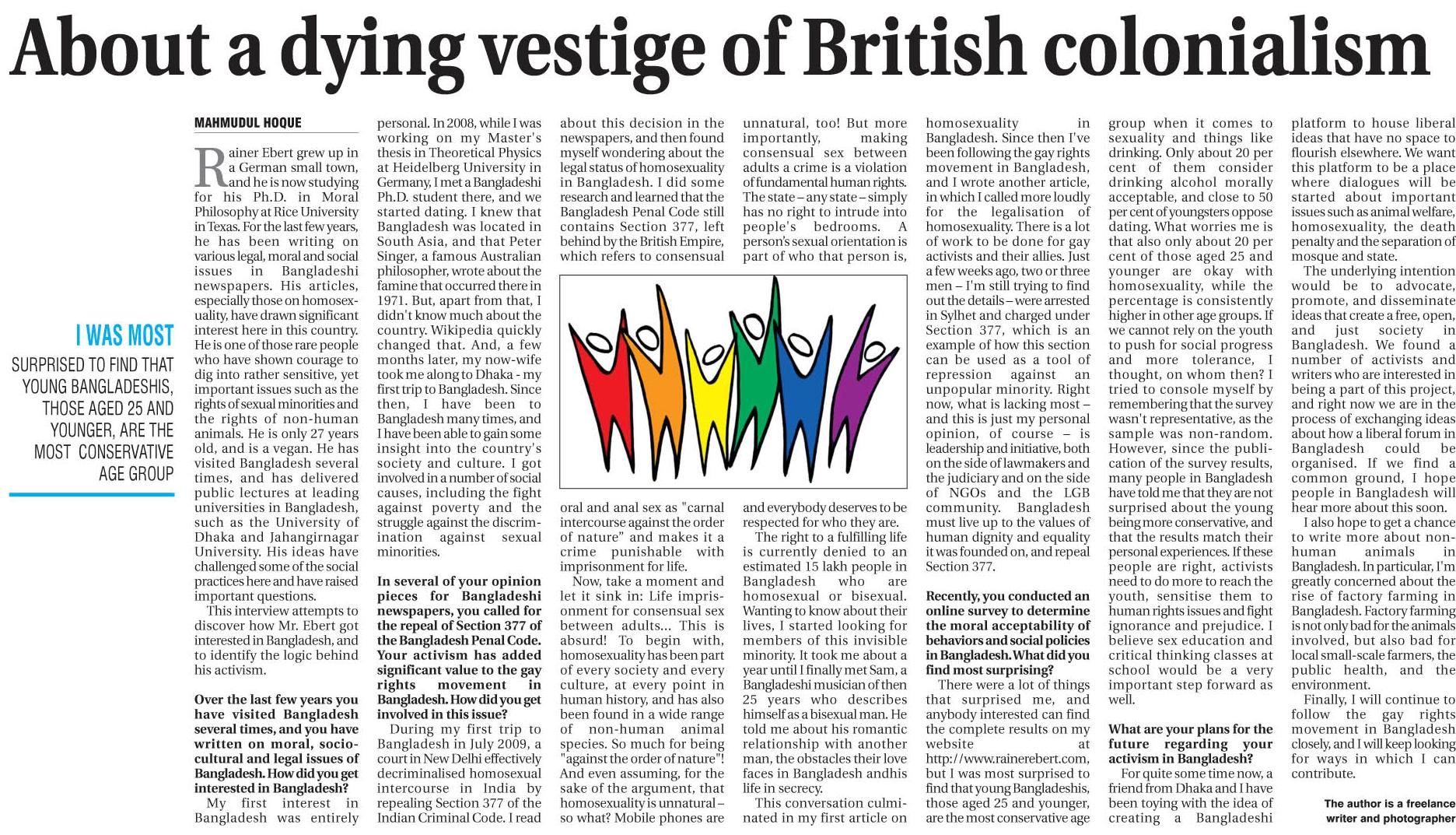
This interview was published in The Independent on September 9, 2012. Continue reading “About a dying vestige of British colonialism”
Background: The Daily Star
It has been reported by multiple news sources that, after a passenger alleged corruption, a man slapped railway employee Boloram Das in the face at Ishwardi Railway Station. That is brutish behaviour, for sure, and it deserves condemnation, but such an incident generally would hardly justify an opinion piece. The man, however, was Communications Minister Obaidul Quader. Continue reading “Quader must apologize”
Many of my Bangladeshi friends and relatives frenetically deny that their compatriots have sex before marriage. Amusingly, about as many unmarried friends in Bangladesh tell me that they are sexually active. I imagine that, partly due to the lack of comprehensive sex education in Bangladeshi schools, a non-negligible number of unmarried women conceive during their adolescent years. If, a few months ago, a friend in that situation had called me, and asked me whom she should talk to about her pregnancy, I would have advised her to talk to people of her age first. I would have argued that adolescents and young adults are more accepting of premarital sex, abortion and having a baby outside of marriage, and that she will more likely find support in her siblings or same-aged friends than in her parents. I would have been wrong. Continue reading “Young Bangladeshis more conservative than their elders, survey finds”
আমার বেশিরভাগ বাংলাদেশি বন্ধু ও আত্মীয়স্বজন তাদের স্বদেশিদের বিয়ে-পূর্ব যৌন-সংসর্গে জড়িত হওয়ার ব্যাপারটি জোরালোভাবে অস্বীকার করেন। কিন্তু মজার ব্যাপার হল, আমার অনেক অবিবাহিত বন্ধু আমাকে জানিয়েছে যে তারা যৌন-সংসর্গে সক্রিয়। এটা আমার ধারণা যে, বাংলাদেশি স্কুলগুলোতে অংশত সমন্বিত যৌনশিক্ষার অভাবে একটি উল্লেখযোগ্য সংখ্যক অবিবাহিত মেয়ে তাদের কিশোরী-জীবনেই গর্ভবতী হয়। কয়েকমাস আগেও এ রকম পরিস্থিতিতে যদি কোনও নারী বন্ধু আমার কাছে জানতে চাইত তার গর্ভবতী হওয়ার ঘটনা কার সঙ্গে তারা শেয়ার করবে, আমি তাকে তার বয়সী মানুষের সঙ্গেই প্রথম কথা বলার জন্য পরামর্শ দিতাম। Continue reading “জরিপ বিশ্লেষণ: বাংলাদেশের যুবসমাজ বেশি রক্ষণশীল”
 University of Nairobi’s Reginald M. J. Oduor talks to Anteneh Roba and Rainer Ebert:
Q: Could you please introduce yourself and describe your academic career?
Dr. Oduor: I am a Kenyan, born in 1963 in Eldoret, a town in the Rift Valley. However, my ancestral home is Ugenya, a part of the former Nyanza Province, now part of Siaya County. As I had total visual disability from the age of one, I studied at the Thika School for the Blind up to O-level. I then undertook my A-level studies at Thika High School, a regular boys’ school, where we were only two boys with visual disabilities; yet, the two of us came out top in a class of ninety-five boys. Continue reading “Interview: African Philosophy, and non-human animals”