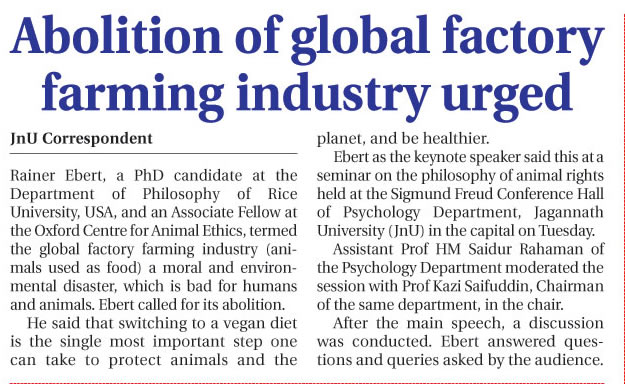
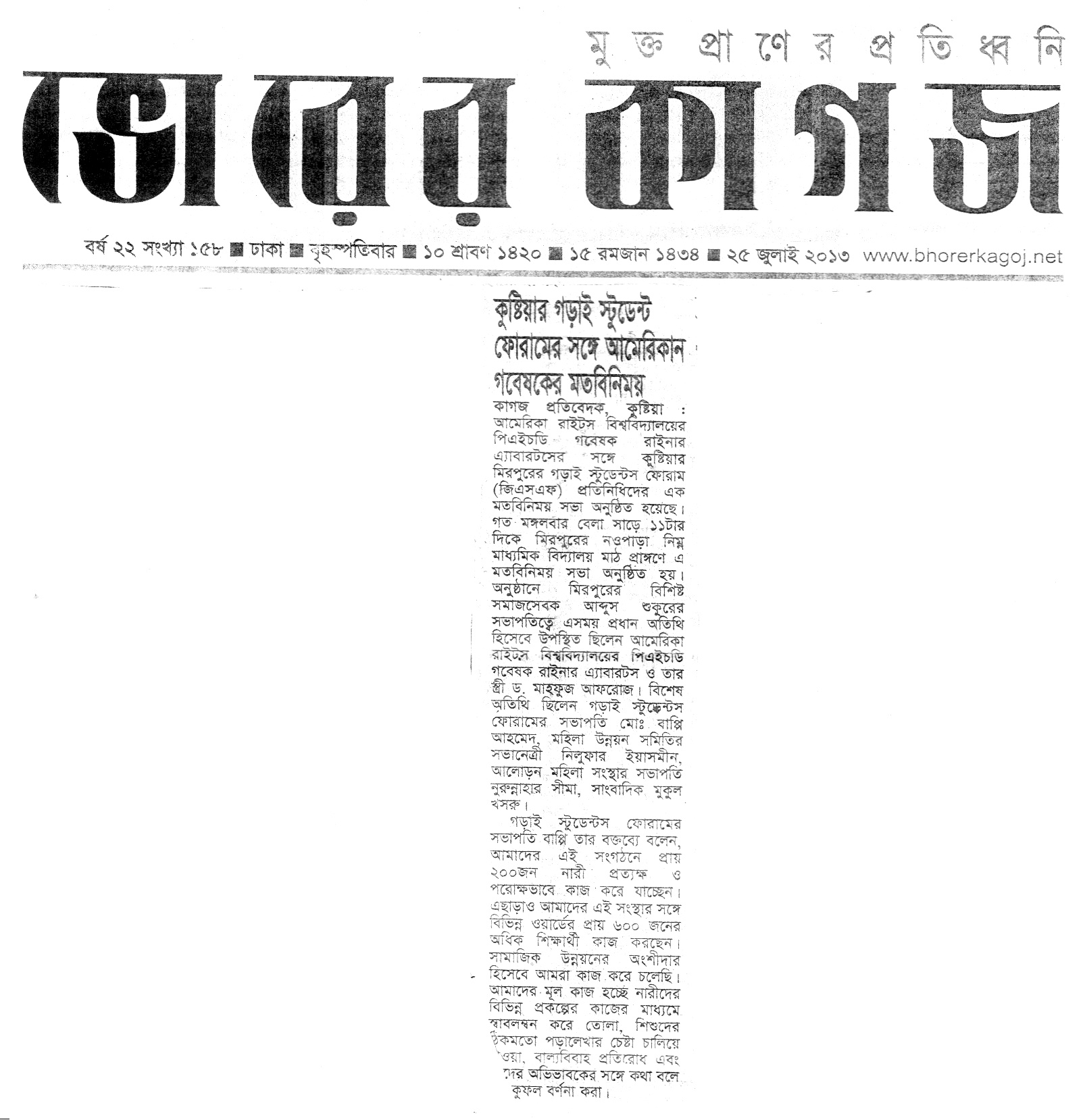
This report was published in The Daily Observer on January 8, 2015.
Blog
Seit 2011 ist in Frankreich ein Gesetz in Kraft, das die Verdeckung des Gesichts in der Öffentlichkeit unter Androhung einer Strafe verbietet. Obwohl immer wieder betont wird, dass das Gesetz auch Strumhauben und andere nicht-religiöse Kleidungsstücke betrifft, ist klar, dass der französische Gesetzgeber vor allem auf islamische Kleidungstücke wie die Burka und den Niqab abgezielt hat. Dies zeigt sich auch daran, dass das Gesetz gemeinhin als „Burka-Verbot“ bekannt ist. Frankreich befindet sich nun in der fragwürdigen Gesellschaft von Saudi Arabien, dem Iran und anderen Staaten, die Frauen dazu zwingen, sich in einer bestimmten Weise zu kleiden. Eine junge Französin muslimischen Glaubens wollte das nicht akzeptieren und zog vor den Europäischen Gerichtshof für Menschenrechte in Straßburg, der das französische Gesetz im vergangenen Juli bestätigte und damit einen besorgniserregenden Präzedenzfall geschaffen hat, der die europäischen Werte der Toleranz, kulturellen Vielfalt und individuellen Freiheit gefährdet, auf die wir zurecht stolz sind. Continue reading “Freiheit und Toleranz statt Burka-Verbot”
গত ২২শে সেপ্টেম্বর ভারতের ভুপালে পশুপাখীর অধিকার সংরক্ষণ কর্মীরা তাজ-উল-মসজিদের সামনে, ঈদ-আল-আধাতে মুসলমানদের পশু কোরবানি না দেবার অনুরোধ সম্বলিত বাণীর প্ল্যাকার্ড নিয়ে শান্তিপূর্ণভাবে দাঁড়িয়ে ছিলেন। তাঁদের বক্তব্য ছিল নিরামিষ আহার স্বাস্থ্যের পক্ষে ভালো তো বটেই, উপরন্তু পরিবেশ, প্রকৃতি ও পশুপাখীদের জন্যেও ভালো। বেনাজির সুরাইয়া ছিলেন এই কর্মীদের একজন। তাঁর পরিধানে ছিল সবুজ রঙের হিজাব এবং লেটুস পাতা দিয়ে মোড়া পরিচ্ছ্দ। তাঁর হাতের প্ল্যাকার্ডে লেখা ছিল Make Eid happy for all- Try Vegan, অর্থাৎ ঈদ যেন সবার জন্য আনন্দময় হোক, নিরামিষ খাবার খেয়ে দেখার চেষ্টা করতে পারেন। Continue reading “পশু কোরবানি কি ধর্ম হতে পারে?”
A few days ago, on September 22, a group of Indian animal rights activist went to the Taj-ul-Masjid in Bhopal, one of the largest mosques on the subcontinent, and tried to persuade Muslims to celebrate a vegan Eid al-Adha this year, by pointing out the many benefits of a plant-based diet for human health, the environment, and the welfare of nonhuman animals. One of the activists, a Muslim woman named Benazir Suraiya, wore a green hijab and an Islamic dress covered in lettuce leaves, and held a sign that said, “Make Eid Happy For All: Try Vegan.” The program was organized by PETA India, a Mumbai-based animal rights organization that operates under the principle that animals are not ours to eat, wear, experiment on, or use for entertainment, and that has organized similar programs on other religious occasions in the past, including Christmas, Easter, Diwali, and Janmashtami. This time, however, things turned violent. A mob formed and started to attack the group of female activists. The women were punched, and hit with shoes, and stones were thrown at them, prompting them to flee the scene while police tried to contain the mob. Disturbingly, some people, including members of the media, seem to believe that the women deserved to be assaulted, and the police in fact booked Ms. Suraiya and two others on charges of hurting religious sentiments. All in all, a woefully common story that would be a good starting point for a discussion of the delicate feelings and sense of entitlement of some religious folk, and the rampant disregard for the rights to freedom of expression and peaceful protest. But I do not want to talk about that here. Instead, in the spirit of the free exchange of ideas, let us have the conversation that was successfully stifled in India. Continue reading “Can slaughter be religion?”
In 2011, a French law came into effect which makes it illegal to cover one’s face in public. Even though lawyers for the French government emphasize that the law also applies to non-religious face-veiling garments, such as balaclavas and hoods, it is clear that its principal target is Muslim clothing, particularly the burqa and the niqab. The legislative process that led to the law now widely known as the French burqa ban started shortly after then-President Nicolas Sarkozy declared that the Islamic burqa – which he thinks makes women “prisoners behind a screen” – is not welcome in France. Those who violate the law face fines of up to 150€, or lessons in French citizenship. Continue reading “The French burqa ban: So much for Liberté!”
On April 24 last year, more than 1,100 people lost their lives in the rubble of Rana Plaza. The tragedy made headlines around the globe, and fundraising committees were formed both in Bangladesh and abroad immediately after the building had collapsed. Horrified by the pictures on social media, in the newspapers and on TV, people from all walks of life spontaneously decided to help. People with no personal relation to those affected by the tragedy, total strangers donated money, medical supplies, and blood, physically participated in the rescue efforts, and took to the streets to protest against a politico-economic system that continues to put the lives of workers in Bangladesh at risk. Continue reading “Fiddling while Rome burns: The ethical cost of living the high life”
সমাজের সম্মুখ দুয়ারের আড়ালে কত রকম দাসত্বই না লুকিয়ে রয়েছে। তৈরি পোশাক আর চামড়া কারখানা থেকে শুরু করে, এমনকি আমাদের ঘরের দরজার আড়ালেও দাসত্ব বিদ্যমান। আমরা সবাই জানি, প্রতিনিয়ত কী ঘটে চলেছে এইসব দরজার পেছনে। Continue reading “দাস ব্যবসার নিকৃষ্টতম স্থান কাঁটাবন”
Animals are the weakest members of our society. They cannot vote, they cannot call hartals, and they cannot hold rallies. They have no legal rights, and – even if they had – they could not go to court and demand that their rights be enforced. They have no voice and cannot speak for themselves. Animals are subject to our whim, easy to exploit and even easier to abuse. If we do not abuse them and instead treat them with the respect they deserve, it is not because of their economic or political clout, but because of our good will, and our compassion. The true test of our humanity hence is not how we behave when dealing with the powerful and privileged, but how we behave when dealing with animals. Mahatma Gandhi must have been thinking along these lines when he famously said, “The greatness of a nation can be judged by the way its animals are treated.” Continue reading “Katabon: A moral disgrace, and a chance”
Many know Leonardo da Vinci as the Italian Renaissance genius who painted the Mona Lisa. Few are familiar with Leonardo’s moral views. Not only was he a generous humanitarian, but he also cared deeply about animals. One of his earliest biographers, Giorgio Vasari, assures us that Leonardo was “fond of all animals, ever treating them with infinite kindness and consideration.” As proof, Vasari recounts stories of encounters Leonardo had with bird traders in the market. On such occasions, Leonardo would often buy birds, and then release them into the sky. He could not bear to see an animal of the air confined to a small cage. Leonardo’s compassion was not restricted to birds though. It is said that he abhorred violence toward any animal. The Italian explorer Andrea Corsali, in a letter to his patron, reported that the members of a people he came across on a trip to pre-colonial South Asia “are so gentle that they do not feed on anything which has blood, nor will they allow anyone to hurt any living thing, like our Leonardo da Vinci.” Leonardo himself wrote that, rather than being the king of all animals, man is the king of all beasts, as he has made his gullet “a tomb for all animals.” From this, and other historical evidence, we may conclude that Leonardo was an ethical vegetarian. He refused to be a party to the unnecessary killing of animals, repulsed by the thought of other sentient beings having to surrender their precious and unique lives for his palate. This view was radical in Renaissance Italy, probably even more radical than it is in most societies today. Continue reading “A New Year’s resolution: Dare to be kind”
There is the kind of slavery that is confined behind closed doors: the doors of garments and leather factories, or the doors of our homes. Of course, we all know what happens behind these doors. Yet, we choose not to think about it too much, because we know it would upset us, because it would disturb the idyllic image we have of society. But sometimes, when a human slave is thrown into the public eye, we are forced to pay attention – as happened recently when Aduri was thrown into a dumpster. If that happens, we are outraged, as if we had not already known what happens in our neighbours’ houses. Part of what makes that inhumanity possible is the fact that “they” – domestic workers, garments and factory workers, etc. – are widely considered less-than-“us”. They are mere means to our ends, and their interests are somewhat less important than ours. That’s what too many of us think, or – at the very least – that’s how too many of us act. Continue reading “The Slave Market of Katabon”
On October 14, the Dhaka Tribune published an open letter, in which my co-authors and I, along with dozens of signatories, urge Muslims in Bangladesh to reconsider the practice of animal sacrifice on Eid al-Adha [1]. Six days later, the same newspaper published a response to our open letter by Muhammad Shafiullah (subsequently referred to as “the author”) who is pursuing his Ph.D. in Economics at Griffith University in Australia [2]. As both publications received a lot of attention in Bangladesh, particularly on social media, and raise fundamentally important questions about the relationship between humans and other animals, I decided to write this rebuttal. What follows are my personal thoughts which do not necessarily reflect the views and opinions of those who signed or co-authored the original open letter. Continue reading “The exploitation of animals: bad for us, bad for the environment, and bad for animals”
For better or for worse, people think in boxes. They have boxes for things, and they have boxes for people: Bengali, westerner, Muslim, Hindu, atheist, Asian, White, Black… Curiously, one pair of boxes seems to play a particularly important role in people’s lives: Think about it… What was the first-ever question that anybody has asked about you? Likely, the answer is: “Is it a boy or a girl?” And, likely, that question was asked before you were even born. But does it really matter whether you are a man or a woman? And should it matter? Continue reading “Masud: “I am a woman””
বিশ্বের অন্যান্য দেশের মতো বাংলাদেশেও কিছু মানুষ নিজ লিঙ্গের মানুষকে যৌনসঙ্গী হিসেবে বেছে নেন। আপনি ভাবতে পারেন ভালোবাসা তো ভালোবাসাই- কিন্তু বিষয়টা কি এত সহজ? Continue reading “সমকামিতা : ধারণা বনাম বাস্তবতা”
আমরা ছিলাম। আমরা আছি। আমরা থাকবো।
যৌন প্রবৃত্তি কি?
যৌন প্রবৃত্তি বলতে বোঝায় পুরুষ, নারী, উভয় লিঙ্গের প্রতি পার¯পারিক আবেগ, প্রণয় এবং /অথবা যৌন আকর্ষণজনিত এক স্থায়ী সম্পর্কাবস্থা। এই যৌন প্রবৃত্তির একটি প্রান্তে কেউ কেউ শুধু মাত্র বিপরীত লিঙ্গের প্রতি আকর্ষণ বোধ করে, আর অপর প্রান্তে কেউ কেউ শুধু মাত্র সমলিঙ্গের প্রতি আকর্ষণ বোধ করে। তবে সাধারণত যৌন প্রবৃত্তিকে তিনটি ভাগে ভাগ করা যায়ঃ বিপরীতকামিতা (বিপরীত লিঙ্গের প্রতি আকর্ষণ), সমকামিতা (সমলিঙ্গের প্রতি আকর্ষণ) এবং উভকামিতা (উভয় লিঙ্গের প্রতি আকর্ষণ)। Continue reading “সমকামিতা সম্পর্কে আপনার কি জানা উচিত”
মানুষের সবচেয়ে গুরুত্বপূর্ণ অধিকার খুব সম্ভব মতপ্রকাশের স্বাধীনতা, এ মুহূর্তে বাংলাদেশে এ নাগরিক অধিকারটি হুমকির সম্মুখীন। হেফাজতে ইসলাম কঠোর ব্লাসফেমি আইন প্রণয়নের দাবি জানাচ্ছে এবং সরকার মুক্তমতের পক্ষে না থেকে একটি হীন আপোষের নীতি গ্রহণ করেছে, ফলে মিডিয়া সাধারণের তথ্যঅধিকার প্রদানে বাধাপ্রাপ্ত হচ্ছে, গ্রেপ্তার হয়েছেন বা হওয়ার আশঙ্কায় রয়েছেন এমন তরুণ ব্লগারদের ভবিষ্যত অনিশ্চিত হয়ে পড়ছে; ধ্বংসের আশঙ্কার মুখে পড়েছে দেশের গণতন্ত্রের ভবিষ্যতটাও। Continue reading “ব্লাসফেমি আইন বনাম মতপ্রকাশের স্বাধীনতা”
“Ever since I was in first grade, I was teased by my classmates for my girlish behavior. Back then, I didn’t even know I was gay; and being called gay was quite offending. I used to get teased, bullied and even took a few hits for my ‘inappropriate’ behavior. Continue reading “Bangladesh’s LGBT Community and the UPR 2013”
The right to express one’s opinion freely is maybe the most important democratic right, and it is currently under assault in Bangladesh. Hifazat-e-Islam demands the introduction of strict blasphemy laws, and the government, instead of defending freedom, resorts to an ill-advised and imprudent appeasement strategy that hinders the press in its duty to inform the public, threatens the futures of young bloggers who were, and continue to be, arrested, and puts in peril the future of the democracy of the country. Continue reading “Blasphemy and the right to offend”
Background: The Guardian
If Mr. Mollah committed the crimes he was convicted for, and if anyone deserves to die, he does. It is hence not surprising that the death penalty is on everybody’s lips in Bangladesh these days. However, we do not wish to comment on the case of Mr. Mollah, as we would hardly be in a position to do so. We leave this case to others more familiar with it and more competent than us. Instead, we will offer some thoughts on capital punishment in general, drawing from the debate about killing criminals in our respective home countries – South Africa and Germany.