The use of postcards has declined dramatically over the last few decades, mainly due to the rise of digital communication. Yet the fact that they have become rare has only enhanced their meaning. Receiving one now feels more special than ever.
What if we could reduce meat consumption, and thereby the suffering of farmed animals, by making people allergic to red meat?
That’s the proposal made in a recent Bioethics article by Parker Crutchfield and Blake Hereth (both at Western Michigan University). They suggest we deliberately promote alpha-gal syndrome (AGS), a condition transmitted by tick bites that can trigger severe allergic reactions to mammalian meat. The idea is simple: if people can’t eat red meat, they won’t, and animals will suffer less.
In a new paper just published in the same journal, my co-author Christian Koeder and I argue that this approach is not only misguided, but morally problematic.
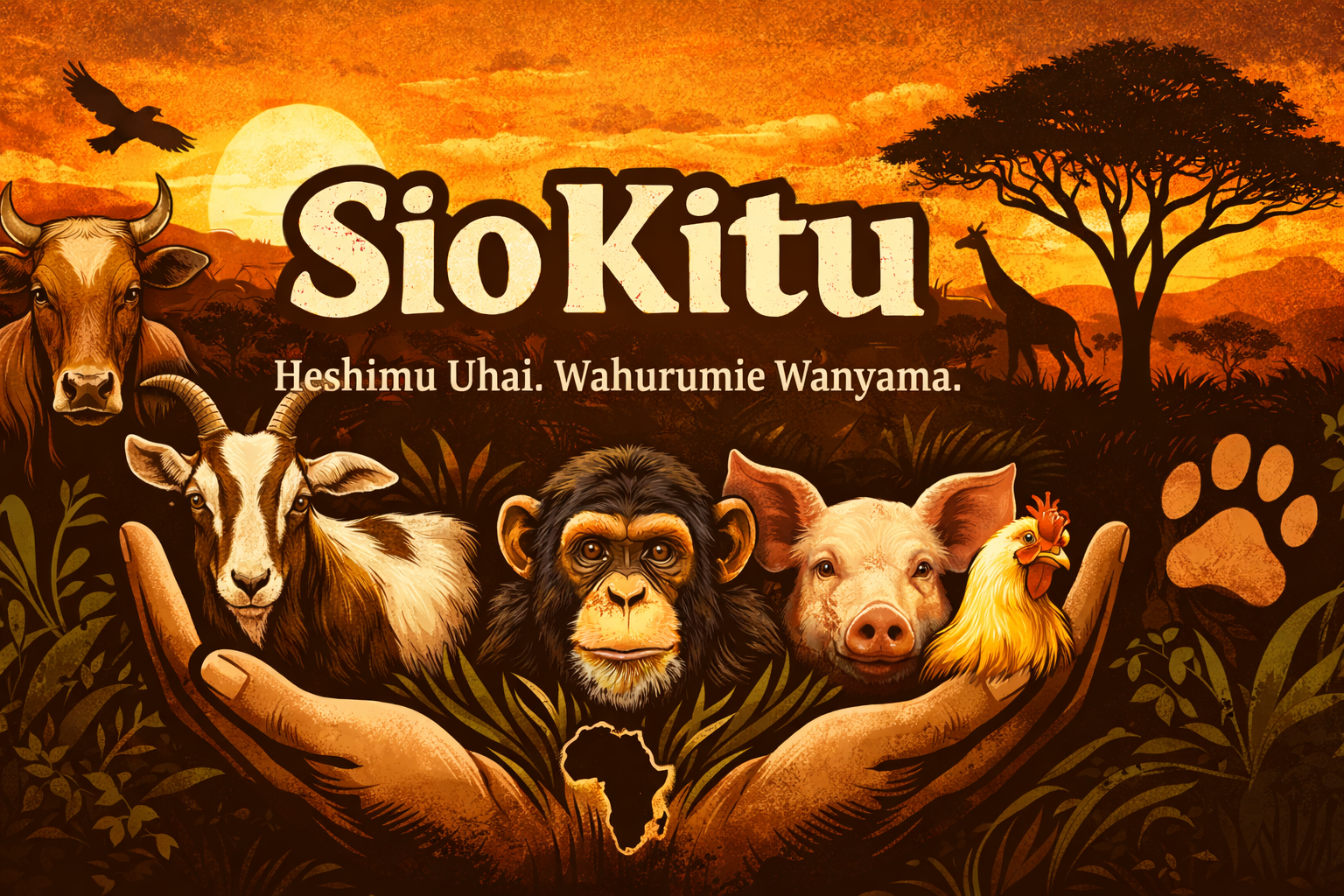
Namna tunavyowatendea wanyama inaonyesha kwa kiasi kikubwa utu wetu. Wanyama hawawezi kuzungumza lugha zetu, lakini wana uwezo wa kuhisi. Wanahisi maumivu, hofu, furaha na faraja—kama sisi. Wanathamini maisha yao, kama sisi tunavyothamini yetu.
Hata hivyo, kila siku wanyama wengi wanateseka. Katika mashamba, maabara, na shughuli za burudani mbalimbali, mara nyingi wanachukuliwa kama vitu tu—vitu vya kutumiwa, kudhibitiwa au kutupwa.
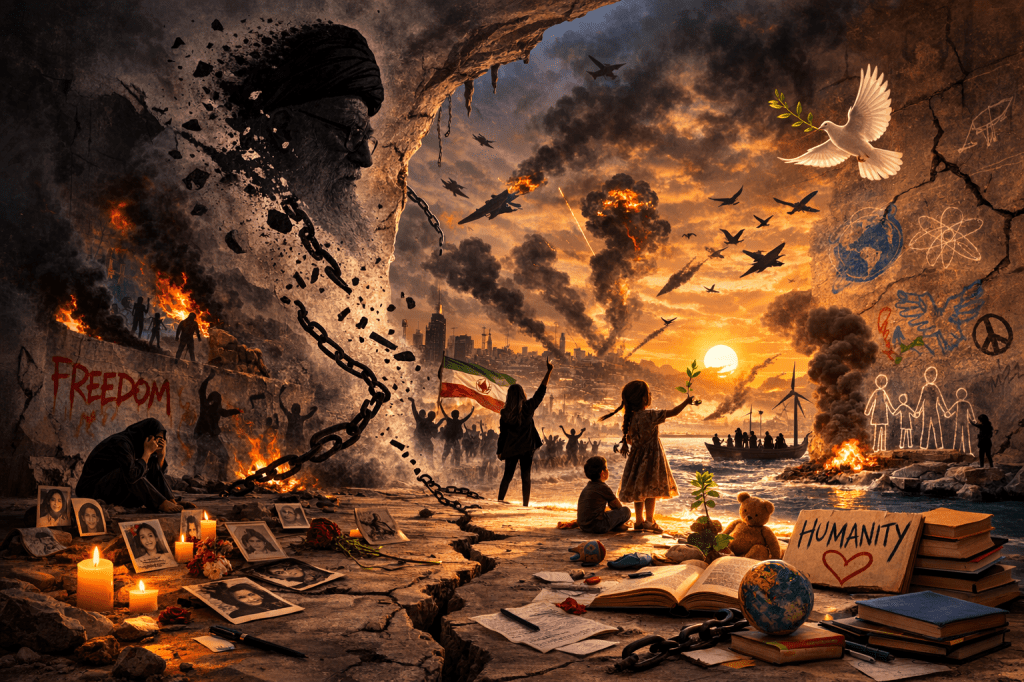
Ali Khamenei is dead. For decades, he held ultimate political and religious authority over a theocratic regime that continues to oppress Iranians at home and sponsor terrorism abroad. For those who survived torture and other forms of ill-treatment at the hands of this regime, those who were forced to flee their homeland to escape persecution, and those who lost friends and family, including the thousands of protesters killed by Iranian security forces in January, this is a moment of relief. Khamenei will not be hurting anyone anymore. For some, joy joins relief in an intricate tangle of emotions that only those who have lived under the shadow of the Grand Ayatollah can truly comprehend.
Wanyama wengine ambao binadamu huwatumia kwa chakula, katika sayansi, huwawinda, huwakamata, na kuwanyanyasa kwa namna mbalimbali, wana maisha yao binafsi ambayo yana thamani kwao wenyewe na sio tu kwa sababu ya matumizi yao kwetu. Sio tu kwamba wapowapo duniani, bali wanaufahamu. Wanachokipitia kina maana kwao. Kila mnyama ana maisha ambayo yanaweza kuwa mazuri au mabaya kulingana na namna anavyotendewa.
It is a winter day in a small town at the far eastern edge of the Himalaya, in the Chinese province of Yunnan. The province is known for its mild climate. Though snowy days are not uncommon, especially in January, if they do occur they are few. Some years go by without any snow reaching the ground at all. On this January day, temperatures are low, but not low enough for snow. It is cold, if one asks the people living here, or cool, if one were to ask people accustomed to harsher climates.
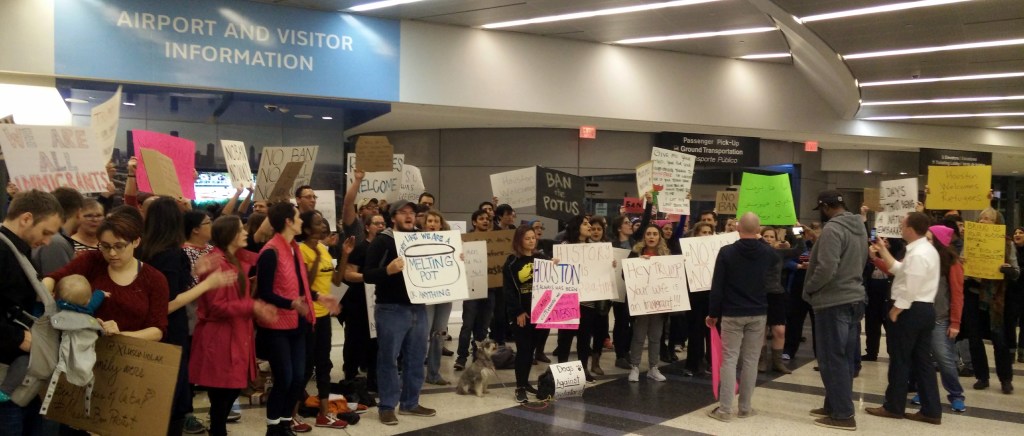
Muslim Ban protest at George Bush Intercontinental Airport on January 28, 2017
Just a week after Donald Trump first took office as President, he signed Executive Order 13769 – his first travel ban. It halted refugee admissions and suspended entry into the U.S. for citizens of Iran, Iraq, Libya, Somalia, Sudan, Syria, and Yemen. All of these countries have a Muslim majority. Because of that, and also because Trump had previously said that he intends to ban Muslims from the U.S., critics referred to the order as a “Muslim ban.” The backlash was immediate and broad, coming from Republicans and Democrats alike, as well as U.S. diplomats, business leaders, universities, faith groups, and international organizations such as the United Nations and Amnesty International. Protests erupted in airports and cities across the U.S. A friend and I – both of us immigrants to the U.S. ourselves – spontaneously drove to the international airport in Houston to express our outrage, along with hundreds of other protesters. I remember I felt hopeful. Surely, even people who didn’t come out to the airport would recoil once they learned what the order was actually doing to real human beings – for example, to the 78-year-old Iranian grandmother, certainly not a threat to national security, who came to the U.S. with a valid visa to visit her children, as she did every year. She was detained for 27 hours at LAX, denied access to lawyers, and fell ill before finally being allowed to enter the country.
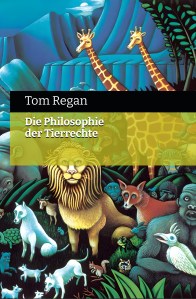
Tom Regan war einer der Begründer der Philosophie der Tierrechte. In seinem Text The Philosophy of Animal Rights, den ich hier neu ins Deutsche übersetzt habe, bietet er eine kompakte Zusammenfassung dieser Philosophie. Ausgangspunkt für Regans Argument ist die Tatsache, dass viele nichtmenschliche Tiere – ebenso wie Menschen – ein Leben haben, das für sie selbst von Bedeutung ist. Sie besitzen ein geistiges Innenleben, können Freude und Leid erfahren und haben daher einen Eigenwert, der unabhängig von ihrem Nutzen für den Menschen besteht.
Die Tiere, die von Menschen gegessen, in der Wissenschaft verwendet, gejagt, mit Fallen gefangen und auf vielerlei andere Weise ausgebeutet werden, haben ein eigenes Leben, das ihnen wichtig ist, unabhängig von ihrem Nutzen für uns. Sie existieren nicht nur in der Welt, sie sind sich der Welt bewusst. Was mit ihnen geschieht, ist für sie von Bedeutung. Jedes Tier hat ein Leben, das für das Tier selbst besser oder schlechter verlaufen kann.
The other animals humans eat, use in science, hunt, trap, and exploit in a variety of ways, have a life of their own that is of importance to them apart from their utility to us. They are not only in the world, they are aware of it. What happens to them matters to them. Each has a life that fares better or worse for the one whose life it is.
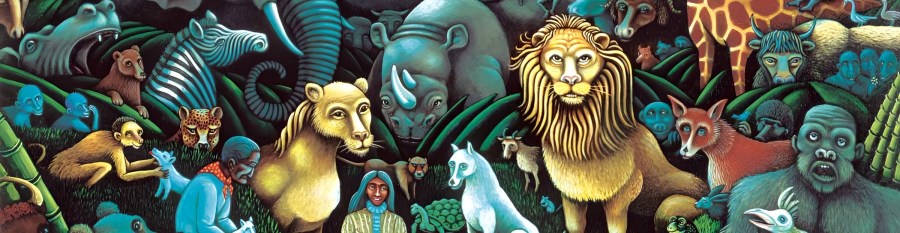
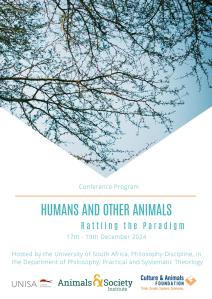
In December 2024, Motlatsi Khosi, Kala Bopape, and I organized an international animal ethics conference, Humans and Other Animals: Rattling the Paradigm, with the aim of creating a space where students and early career practitioners, particularly from the Global South, could meet and explore the complex relationship between humans and other animals.
After the conclusion of the conference, the presenters were invited to work their presentations into publishable papers. The result is a special issue of the Bangladesh Journal of Bioethics, which has just been published and is available here. It contains the following articles, all of which are open access:
For some, it’s as routine as paying at the checkout counter. For others, it’s as nerve-wracking as a prostate exam, and as undignified as being reprimanded in front of class. Which experience you have depends largely on one thing: where you were born.
January 29, 2025 is the first day of a new year, the Year of the Snake, on the lunisolar Chinese calendar. People of Chinese heritage all over the world are immersed in the festive joy of Chinese New Year – or the Spring Festival, as it is more commonly known. Just in time for this year’s Spring Festival, UNESCO inscribed the festival on its Representative List of the Intangible Cultural Heritage of Humanity. If you have ever seen the vibrant dragon and lion dances or wondered about the meaning behind the red envelopes handed out during this time, you have had a glimpse into the traditions of the Spring Festival. You may not know much about the details, but when it comes to family affection, the emotional core that defines the Spring Festival, you are surely no stranger.
Voltaire once wrote, “L’oreille est le chemin du cœur.” – The ear is the way to the heart. Few would argue against the importance of listening. Yet, in reality, we often respond passively, offering merely superficial acknowledgment, instead of truly listening. We would rather have others listen to us, and the rise of social media has made it easier to demand just that. As a result, the world has become noisier. Thoughts are expressed more readily, and shared more widely, yet people are feeling lonelier, and less connected. Whether it is the anxiety and uneasiness in one’s heart, the misunderstandings and estrangements among family and friends, or political conflicts, a lack of listening cannot escape sharing in the blame.
When Samia Suluhu became President in 2021, there was real hope that Tanzania would move away from the oppressive authoritarianism of her predecessor, John Magufuli, and toward a more democratic style of governance. Three years later, little hope is left.
In just the last ten days, Tanzania’s democracy has suffered two serious blows. The first occurred in Dar es Salaam on September 23, when police were deployed in large numbers to prevent peaceful protests against killings and abductions of government critics, and opposition leaders, as well as journalists covering the protests, were arrested. The second blow came just hours ago from the Tanzania Communications Regulatory Authority (TCRA), which suspended the online media services licenses previously issued to the country’s leading newspapers, The Citizen and Mwananchi. The reason for the suspension is an animated video published on October 1. It shows Suluhu watching citizens lament the disappearances of family members on TV.
অন্য যেসব প্রাণীকে মানুষ খায়, বিজ্ঞানে ব্যবহার করে, শিকার করে, ফাঁদ পেতে ধরে এবং বিচিত্র উপায়ে শোষণ করে, আমাদের কাছে তাদের উপযোগিতা ছাড়াও তাদের একটি স্বকীয় জীবন রয়েছে যা তাদের কাছে গুরুত্বপূর্ণ। তারা যে শুধু পৃথিবীর মাঝে অস্তিত্বশীল তা-ই নয়, তারা এ ব্যাপারে অবগতও বটে। তাদের জীবনে যা ঘটে তা তাদের কাছে গুরুত্বপূর্ণ। প্রত্যেকের একটি জীবন আছে যা জীবনধারীর কাছে উৎকৃষ্টতর বা নিকৃষ্টতররূপে প্রতিভাত হতে পারে।
78 abstracts from numerous countries were submitted in response to our call for abstracts, out of which nine were selected for presentation. On each conference day, there will be three sessions of 45 minutes.
The conference language is English. Attendance is free, and anybody anywhere is welcome to join! If you would like to attend, please register using this form no later than Friday, December 13, 2024.
You can find the complete program on our conference website. For a PDF copy, please click here. A poster is available here.
Last week’s political violence was by far the worst since I first visited and fell in love with this country fifteen years ago. Some media outlets report 150 lives lost, others 170. Among those who lost their lives are children and young adults, noninvolved bystanders, and security personnel. Once the dust settles and a careful tabulation is done, the actual number of deaths could well be multiples of the numbers circulating at the moment. In addition, thousands were injured, many of whom have a long road of recovery ahead, and some of whom will never fully recover.
Sadly, postcards are not as popular anymore as they once were, which is why in many places they are increasingly hard to find. Postcrossing has been trying to revive the culture of sending postcards, with remarkable success, and there are communities of collectors across the globe.
When people are treated monstrously, we say they are “treated like animals.” This is because we treat animals monstrously. We mistreat and abuse them on farms, transport them in cramped and stressful conditions, torture them in laboratories, hunt them for sport, and use them for our entertainment in circuses and zoos. You know that, I know that, everyone knows that. And yet, the horror continues, and it continues on a scale that is truly mind-boggling.











 Rainer Ebert