
 I am deeply saddened by and strongly condemn the heinous and cowardly murder of Dr. Avijit Roy. Avijit was a prolific author, a loyal supporter of Bangladesh’s LGBT rights movement, a fearless defender of free speech, and the founder of Mukto-Mona, a secular online platform dedicated to freethinking, humanism and rationalism. In the few interactions I had with him as a contributor to Mukto-Mona, he was always very kind and encouraging. Continue reading “Statement on the Murder of Dr. Avijit Roy”
Category: Bangladesh
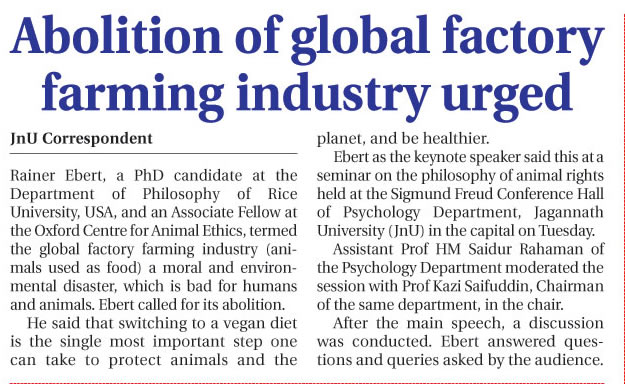
This report was published in The Daily Observer on January 8, 2015.
গত ২২শে সেপ্টেম্বর ভারতের ভুপালে পশুপাখীর অধিকার সংরক্ষণ কর্মীরা তাজ-উল-মসজিদের সামনে, ঈদ-আল-আধাতে মুসলমানদের পশু কোরবানি না দেবার অনুরোধ সম্বলিত বাণীর প্ল্যাকার্ড নিয়ে শান্তিপূর্ণভাবে দাঁড়িয়ে ছিলেন। তাঁদের বক্তব্য ছিল নিরামিষ আহার স্বাস্থ্যের পক্ষে ভালো তো বটেই, উপরন্তু পরিবেশ, প্রকৃতি ও পশুপাখীদের জন্যেও ভালো। বেনাজির সুরাইয়া ছিলেন এই কর্মীদের একজন। তাঁর পরিধানে ছিল সবুজ রঙের হিজাব এবং লেটুস পাতা দিয়ে মোড়া পরিচ্ছ্দ। তাঁর হাতের প্ল্যাকার্ডে লেখা ছিল Make Eid happy for all- Try Vegan, অর্থাৎ ঈদ যেন সবার জন্য আনন্দময় হোক, নিরামিষ খাবার খেয়ে দেখার চেষ্টা করতে পারেন। Continue reading “পশু কোরবানি কি ধর্ম হতে পারে?”
A few days ago, on September 22, a group of Indian animal rights activist went to the Taj-ul-Masjid in Bhopal, one of the largest mosques on the subcontinent, and tried to persuade Muslims to celebrate a vegan Eid al-Adha this year, by pointing out the many benefits of a plant-based diet for human health, the environment, and the welfare of nonhuman animals. One of the activists, a Muslim woman named Benazir Suraiya, wore a green hijab and an Islamic dress covered in lettuce leaves, and held a sign that said, “Make Eid Happy For All: Try Vegan.” The program was organized by PETA India, a Mumbai-based animal rights organization that operates under the principle that animals are not ours to eat, wear, experiment on, or use for entertainment, and that has organized similar programs on other religious occasions in the past, including Christmas, Easter, Diwali, and Janmashtami. This time, however, things turned violent. A mob formed and started to attack the group of female activists. The women were punched, and hit with shoes, and stones were thrown at them, prompting them to flee the scene while police tried to contain the mob. Disturbingly, some people, including members of the media, seem to believe that the women deserved to be assaulted, and the police in fact booked Ms. Suraiya and two others on charges of hurting religious sentiments. All in all, a woefully common story that would be a good starting point for a discussion of the delicate feelings and sense of entitlement of some religious folk, and the rampant disregard for the rights to freedom of expression and peaceful protest. But I do not want to talk about that here. Instead, in the spirit of the free exchange of ideas, let us have the conversation that was successfully stifled in India. Continue reading “Can slaughter be religion?”
On April 24 last year, more than 1,100 people lost their lives in the rubble of Rana Plaza. The tragedy made headlines around the globe, and fundraising committees were formed both in Bangladesh and abroad immediately after the building had collapsed. Horrified by the pictures on social media, in the newspapers and on TV, people from all walks of life spontaneously decided to help. People with no personal relation to those affected by the tragedy, total strangers donated money, medical supplies, and blood, physically participated in the rescue efforts, and took to the streets to protest against a politico-economic system that continues to put the lives of workers in Bangladesh at risk. Continue reading “Fiddling while Rome burns: The ethical cost of living the high life”
সমাজের সম্মুখ দুয়ারের আড়ালে কত রকম দাসত্বই না লুকিয়ে রয়েছে। তৈরি পোশাক আর চামড়া কারখানা থেকে শুরু করে, এমনকি আমাদের ঘরের দরজার আড়ালেও দাসত্ব বিদ্যমান। আমরা সবাই জানি, প্রতিনিয়ত কী ঘটে চলেছে এইসব দরজার পেছনে। Continue reading “দাস ব্যবসার নিকৃষ্টতম স্থান কাঁটাবন”
Animals are the weakest members of our society. They cannot vote, they cannot call hartals, and they cannot hold rallies. They have no legal rights, and – even if they had – they could not go to court and demand that their rights be enforced. They have no voice and cannot speak for themselves. Animals are subject to our whim, easy to exploit and even easier to abuse. If we do not abuse them and instead treat them with the respect they deserve, it is not because of their economic or political clout, but because of our good will, and our compassion. The true test of our humanity hence is not how we behave when dealing with the powerful and privileged, but how we behave when dealing with animals. Mahatma Gandhi must have been thinking along these lines when he famously said, “The greatness of a nation can be judged by the way its animals are treated.” Continue reading “Katabon: A moral disgrace, and a chance”
There is the kind of slavery that is confined behind closed doors: the doors of garments and leather factories, or the doors of our homes. Of course, we all know what happens behind these doors. Yet, we choose not to think about it too much, because we know it would upset us, because it would disturb the idyllic image we have of society. But sometimes, when a human slave is thrown into the public eye, we are forced to pay attention – as happened recently when Aduri was thrown into a dumpster. If that happens, we are outraged, as if we had not already known what happens in our neighbours’ houses. Part of what makes that inhumanity possible is the fact that “they” – domestic workers, garments and factory workers, etc. – are widely considered less-than-“us”. They are mere means to our ends, and their interests are somewhat less important than ours. That’s what too many of us think, or – at the very least – that’s how too many of us act. Continue reading “The Slave Market of Katabon”
For better or for worse, people think in boxes. They have boxes for things, and they have boxes for people: Bengali, westerner, Muslim, Hindu, atheist, Asian, White, Black… Curiously, one pair of boxes seems to play a particularly important role in people’s lives: Think about it… What was the first-ever question that anybody has asked about you? Likely, the answer is: “Is it a boy or a girl?” And, likely, that question was asked before you were even born. But does it really matter whether you are a man or a woman? And should it matter? Continue reading “Masud: “I am a woman””
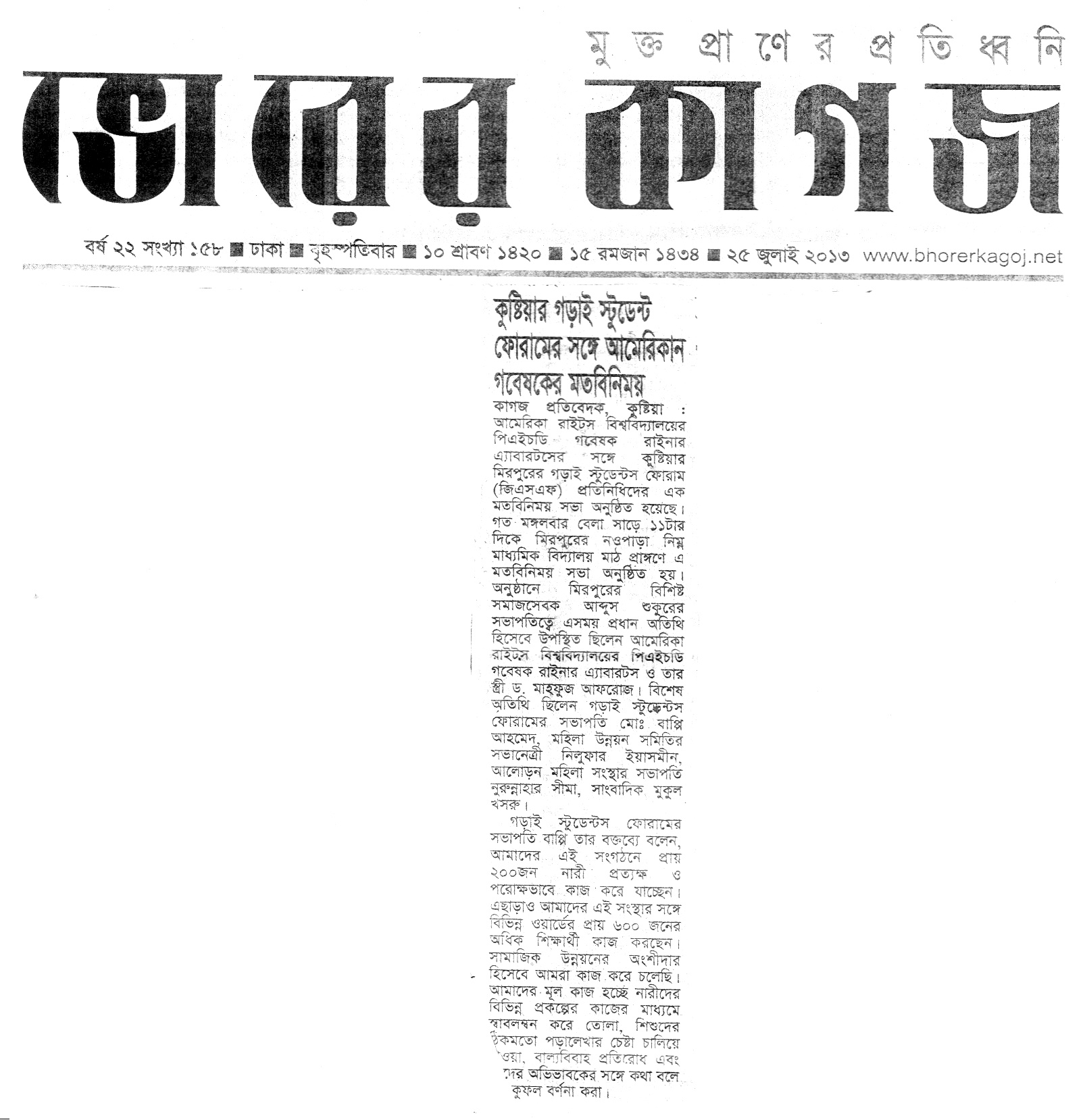
This article was published in the Bhorer Kagoj on July 25, 2013.
বিশ্বের অন্যান্য দেশের মতো বাংলাদেশেও কিছু মানুষ নিজ লিঙ্গের মানুষকে যৌনসঙ্গী হিসেবে বেছে নেন। আপনি ভাবতে পারেন ভালোবাসা তো ভালোবাসাই- কিন্তু বিষয়টা কি এত সহজ? Continue reading “সমকামিতা : ধারণা বনাম বাস্তবতা”
আমরা ছিলাম। আমরা আছি। আমরা থাকবো।
যৌন প্রবৃত্তি কি?
যৌন প্রবৃত্তি বলতে বোঝায় পুরুষ, নারী, উভয় লিঙ্গের প্রতি পার¯পারিক আবেগ, প্রণয় এবং /অথবা যৌন আকর্ষণজনিত এক স্থায়ী সম্পর্কাবস্থা। এই যৌন প্রবৃত্তির একটি প্রান্তে কেউ কেউ শুধু মাত্র বিপরীত লিঙ্গের প্রতি আকর্ষণ বোধ করে, আর অপর প্রান্তে কেউ কেউ শুধু মাত্র সমলিঙ্গের প্রতি আকর্ষণ বোধ করে। তবে সাধারণত যৌন প্রবৃত্তিকে তিনটি ভাগে ভাগ করা যায়ঃ বিপরীতকামিতা (বিপরীত লিঙ্গের প্রতি আকর্ষণ), সমকামিতা (সমলিঙ্গের প্রতি আকর্ষণ) এবং উভকামিতা (উভয় লিঙ্গের প্রতি আকর্ষণ)। Continue reading “সমকামিতা সম্পর্কে আপনার কি জানা উচিত”
মানুষের সবচেয়ে গুরুত্বপূর্ণ অধিকার খুব সম্ভব মতপ্রকাশের স্বাধীনতা, এ মুহূর্তে বাংলাদেশে এ নাগরিক অধিকারটি হুমকির সম্মুখীন। হেফাজতে ইসলাম কঠোর ব্লাসফেমি আইন প্রণয়নের দাবি জানাচ্ছে এবং সরকার মুক্তমতের পক্ষে না থেকে একটি হীন আপোষের নীতি গ্রহণ করেছে, ফলে মিডিয়া সাধারণের তথ্যঅধিকার প্রদানে বাধাপ্রাপ্ত হচ্ছে, গ্রেপ্তার হয়েছেন বা হওয়ার আশঙ্কায় রয়েছেন এমন তরুণ ব্লগারদের ভবিষ্যত অনিশ্চিত হয়ে পড়ছে; ধ্বংসের আশঙ্কার মুখে পড়েছে দেশের গণতন্ত্রের ভবিষ্যতটাও। Continue reading “ব্লাসফেমি আইন বনাম মতপ্রকাশের স্বাধীনতা”
“Ever since I was in first grade, I was teased by my classmates for my girlish behavior. Back then, I didn’t even know I was gay; and being called gay was quite offending. I used to get teased, bullied and even took a few hits for my ‘inappropriate’ behavior. Continue reading “Bangladesh’s LGBT Community and the UPR 2013”
The right to express one’s opinion freely is maybe the most important democratic right, and it is currently under assault in Bangladesh. Hifazat-e-Islam demands the introduction of strict blasphemy laws, and the government, instead of defending freedom, resorts to an ill-advised and imprudent appeasement strategy that hinders the press in its duty to inform the public, threatens the futures of young bloggers who were, and continue to be, arrested, and puts in peril the future of the democracy of the country. Continue reading “Blasphemy and the right to offend”

Background: The Guardian
If Mr. Mollah committed the crimes he was convicted for, and if anyone deserves to die, he does. It is hence not surprising that the death penalty is on everybody’s lips in Bangladesh these days. However, we do not wish to comment on the case of Mr. Mollah, as we would hardly be in a position to do so. We leave this case to others more familiar with it and more competent than us. Instead, we will offer some thoughts on capital punishment in general, drawing from the debate about killing criminals in our respective home countries – South Africa and Germany.
Amra Chhilam. Amra Achhi. Amra Thakbo.
What is sexual orientation?
Sexual orientation refers to an enduring pattern of emotional, romantic, and/or sexual attractions to men, women, or both sexes. Sexual orientation ranges along a continuum, from exclusive attraction to the other sex to exclusive attraction to the same sex. However, sexual orientation is usually discussed in terms of three categories: heterosexual (having attractions to members of the other sex), gay/lesbian (men attracted to men/women attracted to women), and bisexual (men or women attracted to both sexes). Continue reading “What You Should Know About Homosexuality”
এটা ছিল শাহানার প্রথম বিদেশভ্রমণ। শাহানা একটি ইংরেজি মাধ্যম স্কুলের দশম শ্রেণির ছাত্রী। তার নিজের স্কুল আর নিউইয়র্কে তাদের একটি পার্টনার স্কুলের যৌথ উদ্যোগে পরিচালিত একটি স্টুডেন্ট-এক্সচেঞ্জ প্রোগ্রামের সূত্রে শাহানার এ ভ্রমণ। প্রতি গ্রীষ্মে তাদের স্কুল থেকে নির্বাচিত হয়ে একজন ছাত্র বা ছাত্রী মার্কিন যুক্তরাষ্ট্রে যায়। সেখানে তাদের পার্টনার স্কুলের একজন শিক্ষার্থীর পরিবারের সঙ্গে সপ্তাহচারেক তার থাকার ব্যবস্থা করা হয়। এর বিপরীতে সে-বছরের শীত-মৌসুমেই ওই স্টুডেন্ট-এক্সচেঞ্জ প্রোগ্রামের অংশ হিসেবে একজন আমেরিকান ছাত্র বা ছাত্রীও বাংলাদেশ ভ্রমণের সুযোগ পায়। Continue reading “ওরা তো আমাদের শিশুদেরই মতো”
“ইন্নোসেন্স অভ মুসলিমস” মুভির ১৪ মিনিটের ট্রেইলারটি, যে মুভির অস্তিত্ব হয়ত আছে, হয়তবা নাই, ডাহা নির্বোধ এবং দুর্বলভাবে নির্মিত। মুসলিম হোক বা না হোক, বুদ্ধিমত্তাসম্পন্ন যে কারো কাছে এটা দেখা বেদনাদায়ক হবে। ইজিপ্সিয়ান বংশদ্ভুত আমেরিকায় অভিবাসী নাকৌলা ব্যাসেলেই নাকৌলা প্রযোজিত ট্রেইলারটা প্রথমে ইউটিউবে আপলোড করা হয় ২০১২ সালের জুলাই মাসে। সে সময় থেকে সেপটেম্বর প্রথম সপ্তাহ পর্যন্ত এটি কারোরই মনোযোগ আকর্ষণ করেনি। তারপর, সেপ্টেম্বারের ৮ তারিখ, মিশরের টেলিভিশন উপস্থাপক খালেদ আব্দুল্লাহ ফিল্মটার উপর রিপোর্ট করেন এবং ট্রেইলারটার আরবী সংস্করনের কিছু অংশ দেখান। তারপর কী হলো তা আমাদের সবার জানা। Continue reading “ইউটিউব নিষেধাজ্ঞা এবং অগ্রগতির সঠিক পথ”

