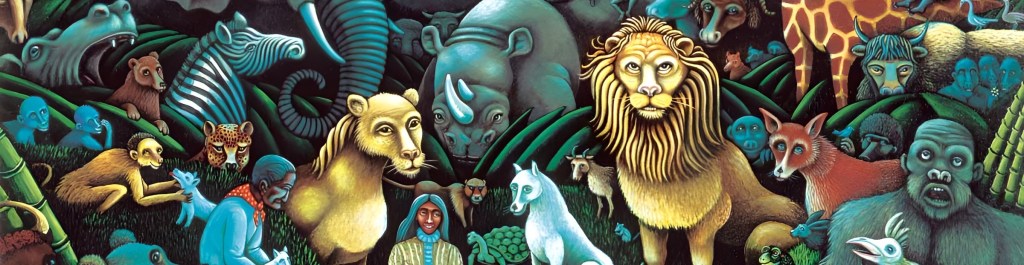
The other animals humans eat, use in science, hunt, trap, and exploit in a variety of ways, have a life of their own that is of importance to them apart from their utility to us. They are not only in the world, they are aware of it. What happens to them matters to them. Each has a life that fares better or worse for the one whose life it is.
Animal Liberation, a 1975 book by Australian philosopher Peter Singer, is widely considered one of the founding texts of the modern animal liberation movement. It develops a new ethics for our treatment of nonhuman animals, according to which their interests should be given the same consideration as the like interests of humans, and calls for an end to practices such as factory farming and animal testing. The book has had a lasting impact on generations of scholars and students and has influenced countless people in all corners of the world to adopt a vegan diet.
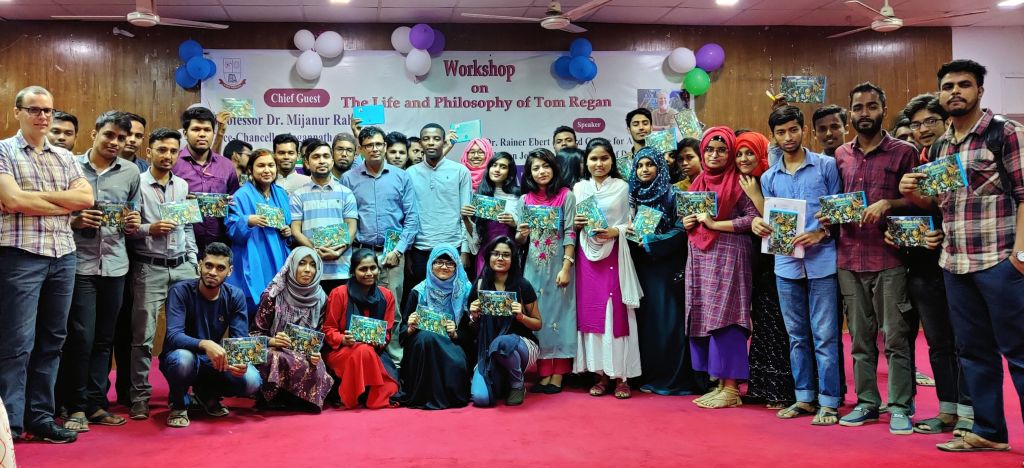
Almost half a century after its first publication, Animal Liberation is now finally available in Swahili! The book was translated by Deogratius Simba and published by Dar es Salaam-based publisher Mkuki na Nyota. It is available for purchase at the TPH Bookshop at 24 Samora Avenue in Dar es Salaam, and everywhere else where Mkuki na Nyota’s books are sold. The retail price is 30,000 TSh. If you are a student at the University of Dar es Salaam (UDSM), you can find a copy of the book at the library of UDSM’s Department of Philosophy and Religious Studies.
Traditional morality assumes that there is something morally special about being human. The fact that someone is a human being, rather than, say, a dog or a cow, makes a big difference in how he or she may be treated. Humans have full and equal moral worth or dignity and thus may not be killed, even if doing so would promote the greater good, whereas non-human animals have a lesser moral status and can be sacrificed for even the most trivial human pleasures.
This moral worldview fits well with the Aristotelian idea of a hierarchy of being, according to which each species is a static group of organisms with a distinct essence. The philosophical line that morally distinguishes humans from other animals corresponds to the empirical line that Aristotle thought distinguishes the human species from other animal species. Since the publication of Charles Darwin’s The Origin of Species in 1859, however, we know that there is no such line on the empirical side of things. We now understand that all life is interrelated, and that biological characteristics come in degrees and continually evolve as a result of natural selection. As the principle of evolutionary continuity informs us, any differences between species are differences in degree, and not in kind. The real picture looks something like this:
Horrified by the tragic loss of innocent human life in the then-ongoing Vietnam War, a young philosopher by the name of Tom Regan went to the university library and buried himself in books on war, violence, and human rights, determined to prove that the American involvement in the war was morally wrong. One day, he picked up Mohandas K. Gandhi’s autobiography, The Story of My Experiments with Truth. Reading it with great care and interest, he must have come across the following lines:
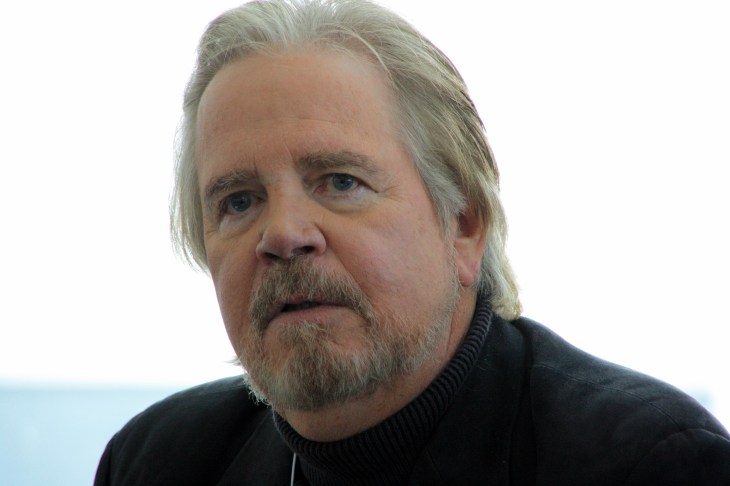
This presentation by Professor Tom Regan (North Carolina State University, USA) was recorded at the University of Heidelberg in Germany on May 24, 2006. It is a great resource for the classroom and anybody with an interest in animal ethics.
Abstract. Philosopher Tom Regan begins by contrasting the fact that many people make a firm distinction between the animals they live with (cats and dogs, for example) and other animals. He explains how it is that Animal Rights Advocates (ARAs) extend the same sense of compassion and respect that they feel for companion animals, on the one hand, to the other animals who routinely are turned into food, clothing, and the like, on the other. Not all ARAs, he explains, arrive at this destination in the same way. In particular, some need to be convinced; some need a logical argument. Professor Regan accepts this challenge and invites others to consider the main factual and moral questions whose answers inform the conviction that animals have rights.