Wanyama wengine ambao binadamu huwatumia kwa chakula, katika sayansi, huwawinda, huwakamata, na kuwanyanyasa kwa namna mbalimbali, wana maisha yao binafsi ambayo yana thamani kwao wenyewe na sio tu kwa sababu ya matumizi yao kwetu. Sio tu kwamba wapowapo duniani, bali wanaufahamu. Wanachokipitia kina maana kwao. Kila mnyama ana maisha ambayo yanaweza kuwa mazuri au mabaya kulingana na namna anavyotendewa.
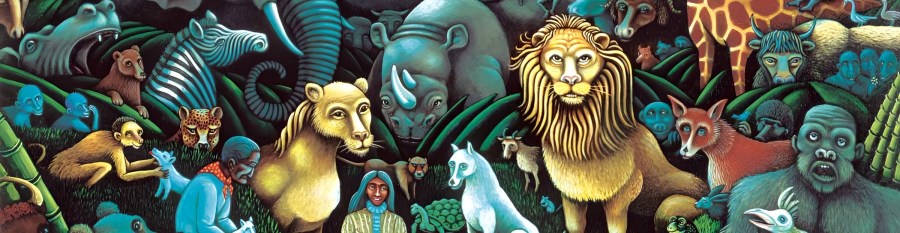
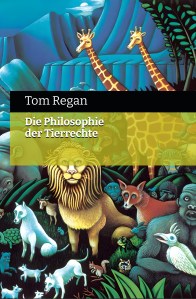
Tom Regan war einer der Begründer der Philosophie der Tierrechte. In seinem Text The Philosophy of Animal Rights, den ich hier neu ins Deutsche übersetzt habe, bietet er eine kompakte Zusammenfassung dieser Philosophie. Ausgangspunkt für Regans Argument ist die Tatsache, dass viele nichtmenschliche Tiere – ebenso wie Menschen – ein Leben haben, das für sie selbst von Bedeutung ist. Sie besitzen ein geistiges Innenleben, können Freude und Leid erfahren und haben daher einen Eigenwert, der unabhängig von ihrem Nutzen für den Menschen besteht.
Die Tiere, die von Menschen gegessen, in der Wissenschaft verwendet, gejagt, mit Fallen gefangen und auf vielerlei andere Weise ausgebeutet werden, haben ein eigenes Leben, das ihnen wichtig ist, unabhängig von ihrem Nutzen für uns. Sie existieren nicht nur in der Welt, sie sind sich der Welt bewusst. Was mit ihnen geschieht, ist für sie von Bedeutung. Jedes Tier hat ein Leben, das für das Tier selbst besser oder schlechter verlaufen kann.
The other animals humans eat, use in science, hunt, trap, and exploit in a variety of ways, have a life of their own that is of importance to them apart from their utility to us. They are not only in the world, they are aware of it. What happens to them matters to them. Each has a life that fares better or worse for the one whose life it is.
অন্য যেসব প্রাণীকে মানুষ খায়, বিজ্ঞানে ব্যবহার করে, শিকার করে, ফাঁদ পেতে ধরে এবং বিচিত্র উপায়ে শোষণ করে, আমাদের কাছে তাদের উপযোগিতা ছাড়াও তাদের একটি স্বকীয় জীবন রয়েছে যা তাদের কাছে গুরুত্বপূর্ণ। তারা যে শুধু পৃথিবীর মাঝে অস্তিত্বশীল তা-ই নয়, তারা এ ব্যাপারে অবগতও বটে। তাদের জীবনে যা ঘটে তা তাদের কাছে গুরুত্বপূর্ণ। প্রত্যেকের একটি জীবন আছে যা জীবনধারীর কাছে উৎকৃষ্টতর বা নিকৃষ্টতররূপে প্রতিভাত হতে পারে।
Horrified by the tragic loss of innocent human life in the then-ongoing Vietnam War, a young philosopher by the name of Tom Regan went to the university library and buried himself in books on war, violence, and human rights, determined to prove that the American involvement in the war was morally wrong. One day, he picked up Mohandas K. Gandhi’s autobiography, The Story of My Experiments with Truth. Reading it with great care and interest, he must have come across the following lines:
This presentation by Professor Tom Regan (North Carolina State University, USA) was recorded at the University of Heidelberg in Germany on May 24, 2006. It is a great resource for the classroom and anybody with an interest in animal ethics.
Abstract. Philosopher Tom Regan begins by contrasting the fact that many people make a firm distinction between the animals they live with (cats and dogs, for example) and other animals. He explains how it is that Animal Rights Advocates (ARAs) extend the same sense of compassion and respect that they feel for companion animals, on the one hand, to the other animals who routinely are turned into food, clothing, and the like, on the other. Not all ARAs, he explains, arrive at this destination in the same way. In particular, some need to be convinced; some need a logical argument. Professor Regan accepts this challenge and invites others to consider the main factual and moral questions whose answers inform the conviction that animals have rights.
Each one of us encounters animals every day, if only as a piece of meat on a plate, and yet most of us hardly spare a thought for them. Shafayat Nazam Rasul must hence be commended for his Tuesday op-ed, in which he drew our attention to the complicated relationship between humans and other animals, and started a conversation that I think is very important. In the course of doing so, he mentioned a number of common objections to the idea that non-human animals are our moral equals and have rights. It is unfortunate, however, that these objections remained unanswered, as readers might have gotten the impression that animal rights advocates “spew an extreme,” as the author rather uncharitably stated, and do not have good arguments. By responding to some of the objections, I want to show that the philosophy of animal rights is in fact a well-thought-out moral theory worthy of our serious attention. Continue reading “Animal Rights: Objections, Myths, and Misconceptions”→







 Rainer Ebert